

They manage the game. We prepare the human.
You’ve created access.
Ready First helps you establish durability.
Children don’t leave sports because opportunities disappear. They leave because they aren’t ready.
By embedding Ready First into registration, you shift from managing participation to safeguarding development—strengthening retention, enhancing credibility, and adding real value to every membership.
Built for the Realities of Governance
Participation at scale is complex.
Uneven readiness
Rising injury and attrition
Volunteer fatigue
Mounting expectations to protect development while sustaining performance pathways create real tension for governing bodies. Ready First introduces a shared readiness standard—helping organizations align policy, programming, and expectations with what young people can safely adapt to over time.
Governance isn’t just about managing access. It’s about safeguarding development.
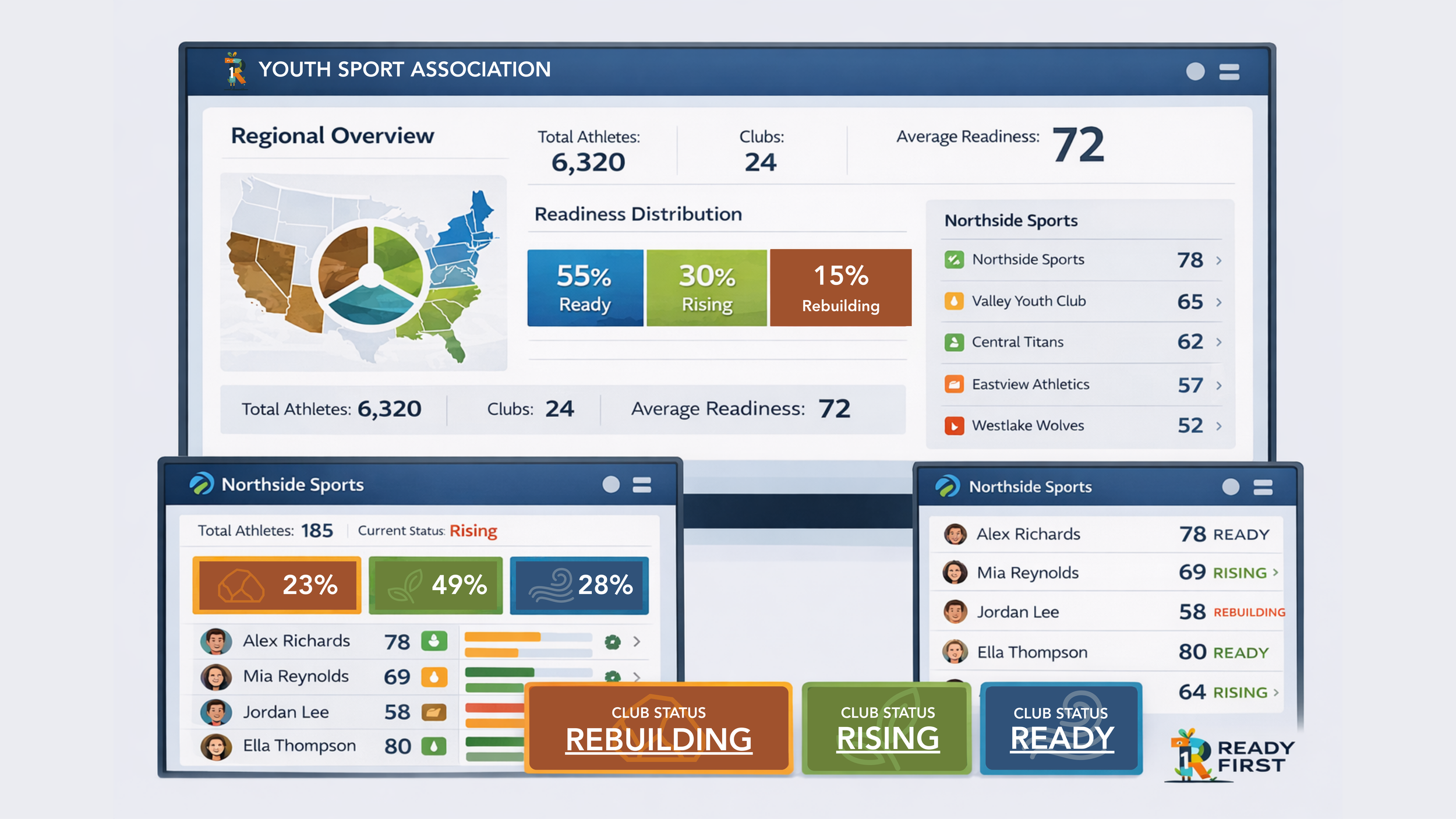

What Organizations Can Expect — and When
Ready First is a developmental readiness system, not a short-term intervention. Its value emerges over time as patterns stabilize, variability reduces, and environments become more aligned with developmental capacity. For this reason, Ready First makes expectations explicit from the outset.
Early Phase (0–30 days): Visibility
Organizations gain clearer readiness language, earlier identification of emerging risk patterns, and more consistent conversations across coaches, parents, and staff.
This phase improves alignment—not outcomes.
Stabilization Phase (30–90 days): Reduced Volatility
As engagement becomes consistent, systems see fewer extreme swings in readiness, more predictable participation, and early stabilization of habits that support availability and recovery.
This phase reduces noise and reactive decision-making.
Developmental Phase (90–180+ days): Meaningful Signal
Only after sustained exposure do reliable developmental signals emerge. At this stage, organizations typically experience lower risk of preventable injury, greater durability of confidence and resilience, and reduced dropout during key transitions.
These outcomes are emergent, not engineered.
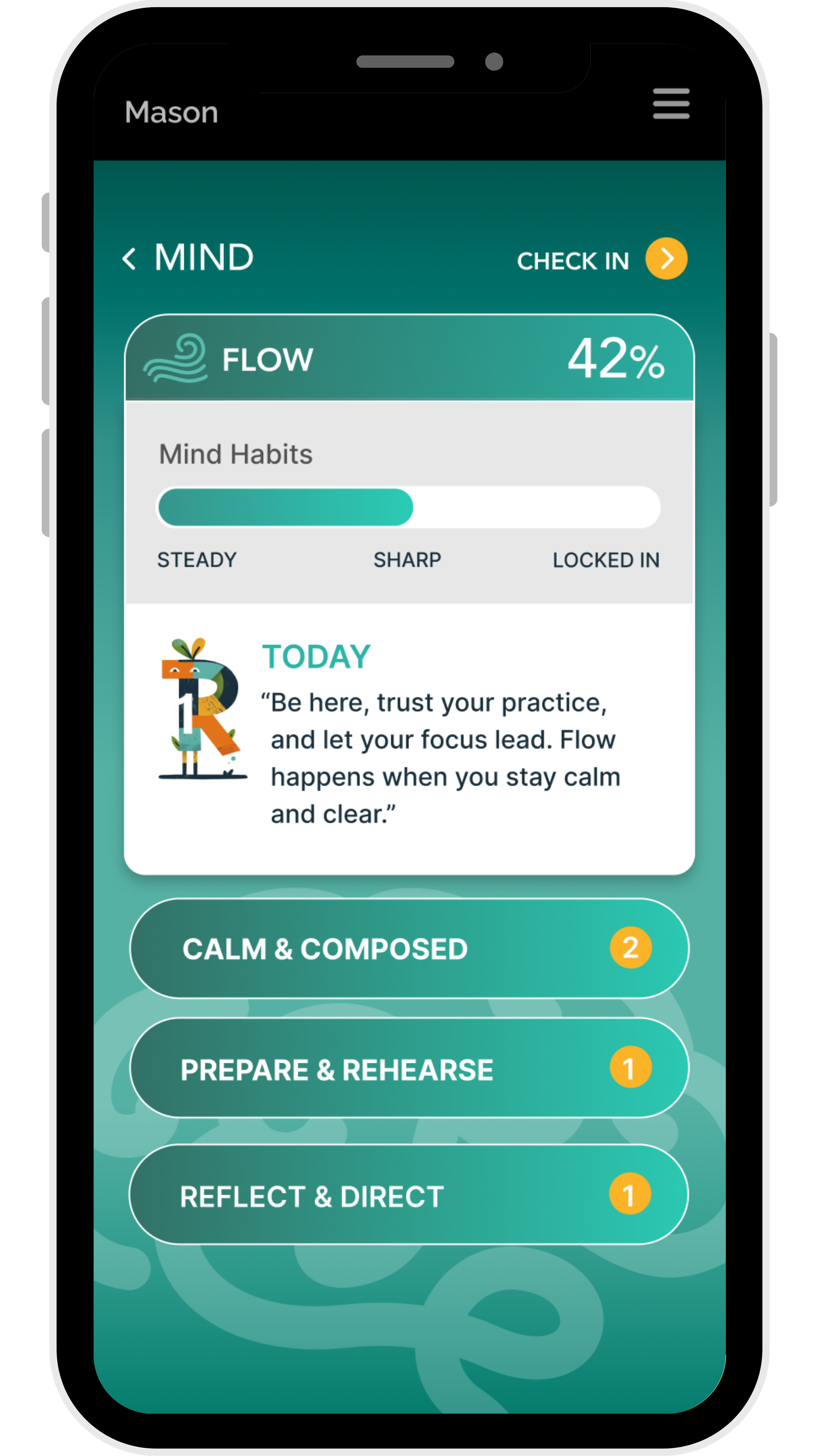
WHAT YOU ARE PROVIDING YOUR MEMBERS

MIND
Confidence, Resilience & Developmental Integrity
When expectations align with readiness rather than age or selection status, athletes experience greater confidence, emotional regulation, and resilience.
This supports learning, engagement, and long-term development, without fear-driven pressure or premature acceleration.
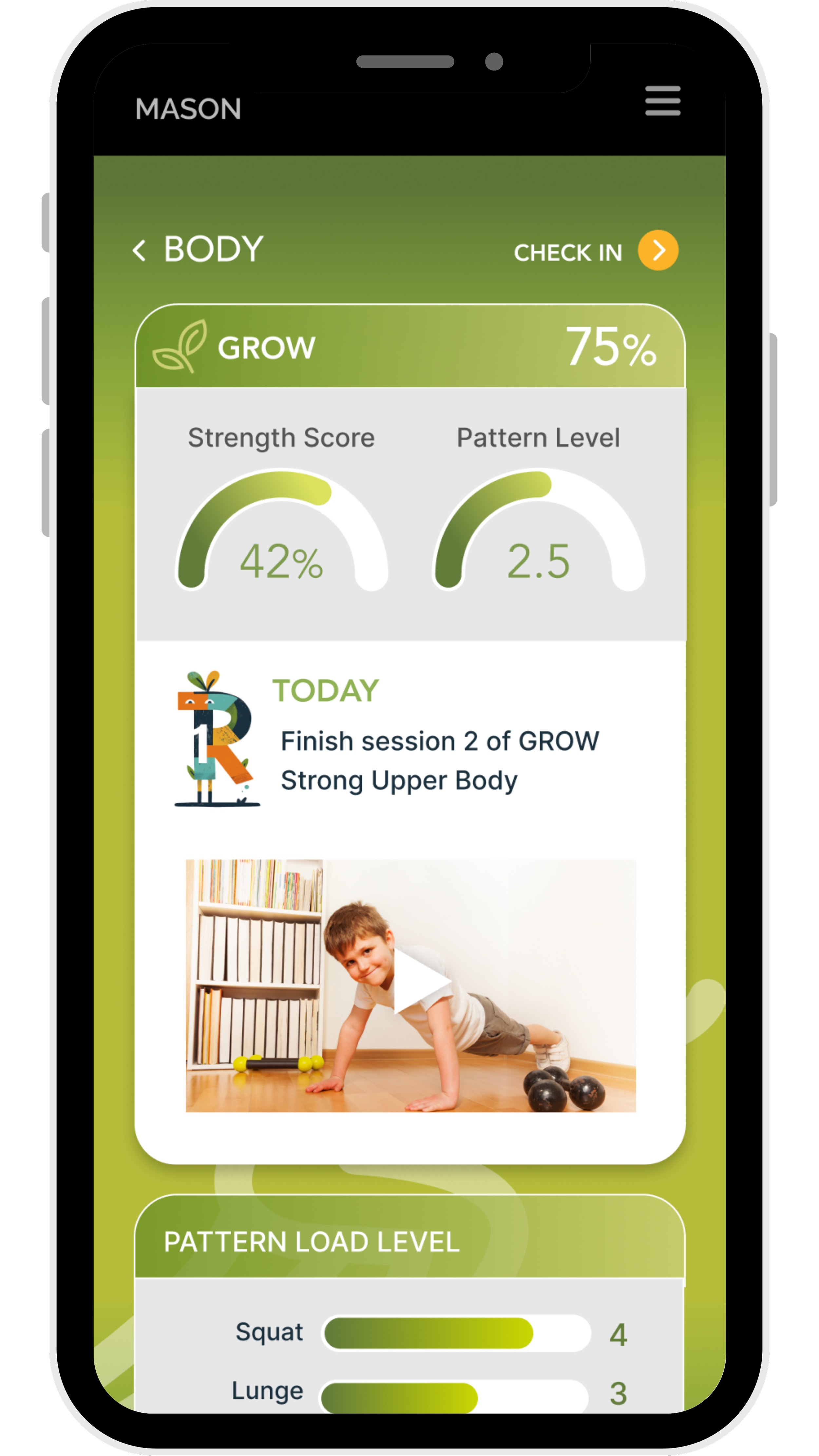

BODY
Athlete Availability & Risk Reduction
Clearer physical readiness patterns support safer exposure, fewer preventable injuries, and more consistent availability across training and competition.
By aligning physical demands with athletes' tolerance and adaptability, development is protected through key transitions.
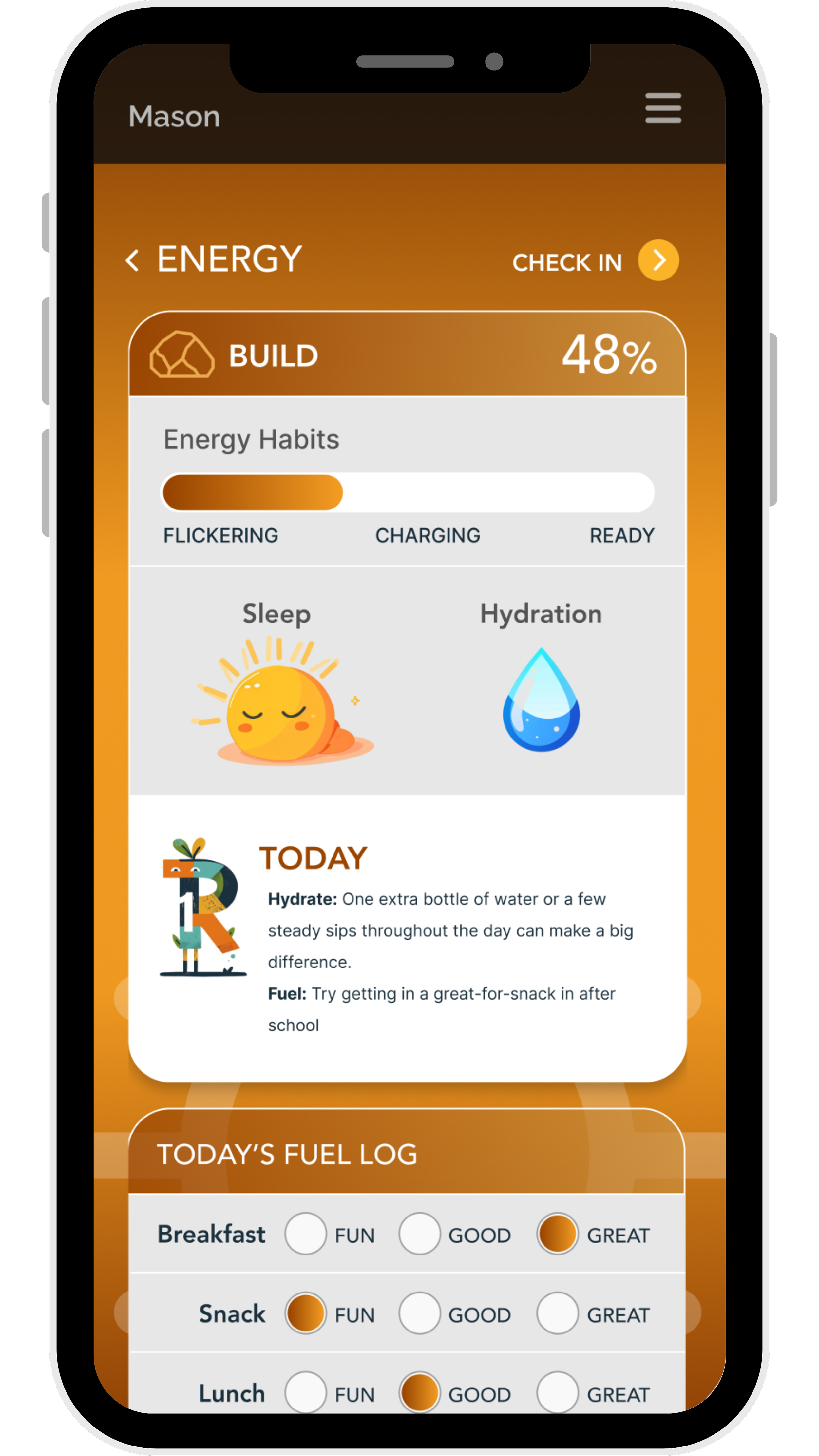

ENERGY
Habits, Sustainability & System Load
Daily habits that underpin readiness—sleep, fueling, hydration, and recovery—are reinforced consistently without turning coaches into monitors or families into enforcers.
As energy stability improves, reactivity decreases, easing pressure on coaches and volunteers and supporting sustainable delivery at scale.
Ready First is not a performance ranking system.
It does not compare individuals, enforce compliance, or accelerate progression.
It does not replace professional judgment or clinical care.
Ready First exists to protect development, reduce preventable risk, and support responsible decision-making under uncertainty, so systems can meet their duty of care without sacrificing long-term potential.