Skip to content
For coaches

You can see their performance. Can you see what's underneath?

You can’t be truly athlete-centered without knowing where each athlete actually is that day. R1 gives you that before practice begins. The translation you’ve been doing in your head, surfaced. The judgment calls you’re already making, faster and better.

Five young athletes in training bibs run a warm-up drill on a grass pitch at golden hour, a girl with a ponytail reaching for the ball in the centre
What you see

Clarity without burden.

Coaching the whole athlete requires knowledge most coaches were never given time to develop: mental readiness, movement risk, load management for growing bodies, early burnout signals. R1 does that analysis. You get the guidance that comes out the other side.

Team roster

Your athletes with readiness zone badges. At a glance, you see who's in Build, Grow, or Flow before the session starts.

Session adjustments

Readiness-based guidance for each athlete, tailored to their state that day. Know how to adapt before the session starts.

Ready to use

No setup, no data entry, no interpretation required. The system does the analysis. You focus on coaching.

Today’s roster
Ava M.Flow
Jordan T.Grow
Maya R.Build
Focus on connection today. Keep intensity low.
Ethan K.Flow
Lily S.Grow

The coach roster – readiness states and session guidance, nothing else.

The signals most coaches are currently missing

Burnout and dropout don’t announce themselves. They accumulate quietly across Mind, Body, and Energy until the child stops showing up.

Most coaches rely on intuition to catch these patterns. Not because they’re poor coaches. Because the signals are invisible without a system to surface them.

R1 makes them measurable. Mental readiness, movement competency, recovery stability. Patterns that precede dropout or injury appear in the data weeks before they show up in behavior.

In practice

Readiness becomes action.

The framework for quality coaching is clear: read and react to the field, shape the environment, match activities to where each athlete actually is.

The hard part has always been execution.

R1 gives you three reads before the session starts. Mind, Body, and Energy. Each one specific. Not a general signal. A coaching direction you can act on immediately.

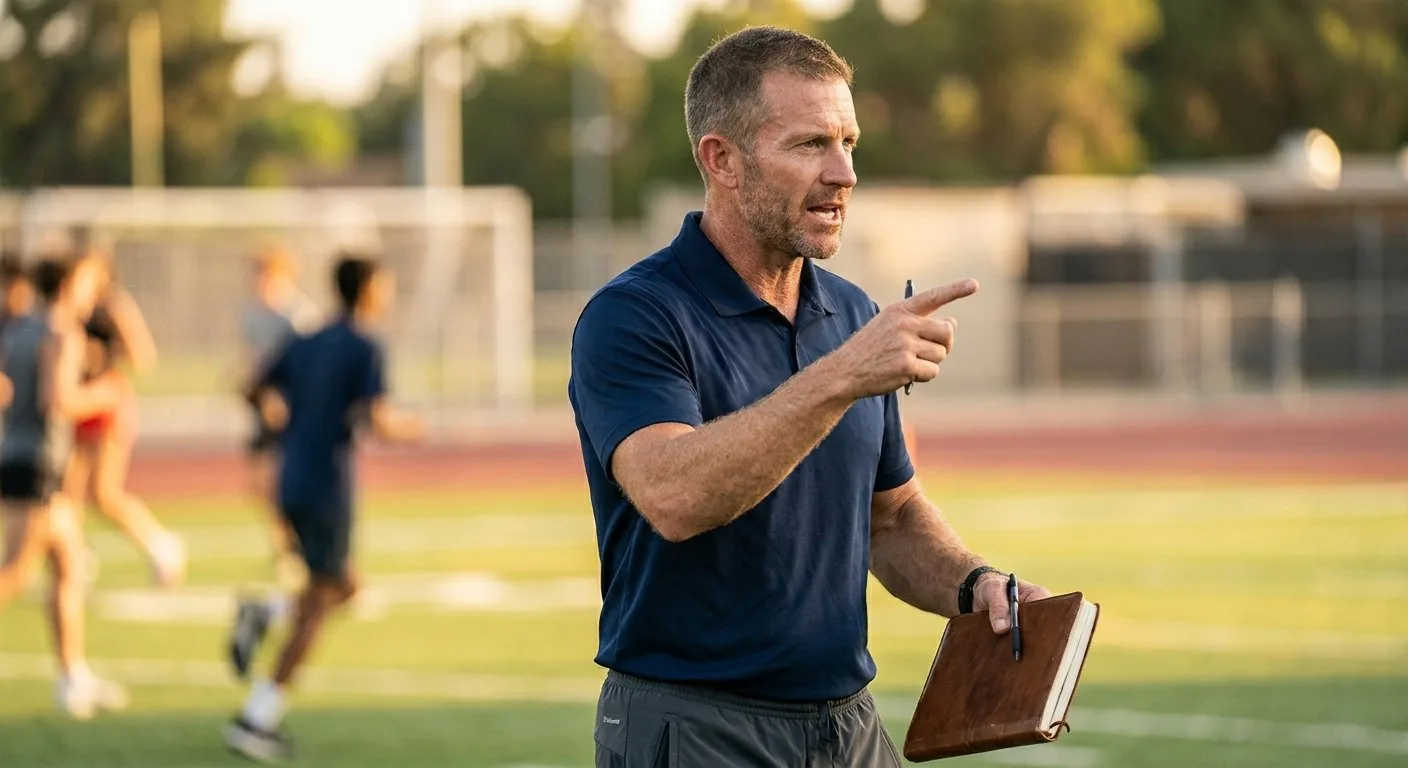
A coach in a navy polo gestures with one hand while holding a leather notebook in the other, athletes training in soft focus behind him at golden hour
Coaching considerations
Build·Mind

“Maclain needs more encouragement than usual right now. Praise the effort, not the outcome. If he disengages, bring him back with connection before you bring him back with challenge.”

Build·Body

“Maclain’s squat pattern is limiting him right now. That pattern is the foundation of every defensive stance, box-out, and change of direction in basketball. When it breaks down, he can’t get into position or stay there under load. Keep loading light, praise every quality attempt, and cue a forward trunk lean to load the hips.”

Build·Energy

“Sleep is the primary recovery gap right now. Expect energy to be erratic today. If he stops or fades, that’s physiology, not attitude. Reduce session density and let the effort come to you.”

Three domains. Three coaching directions. Before the session starts.

Read: Motivation energy – how adult systems either ignite or drain youth engagement.

Body domain

Physical readiness is not the same as physical ability

A gifted, athletic-looking child can be accumulating injury risk that nobody can see without measuring it. R1’s Body domain is built on movement competency, not performance output. Growth and maturation create windows where load tolerance changes faster than the training environment adjusts. R1 tracks that, so volume and periodization decisions are grounded in each child’s actual capacity.

Season record

What carries forward

At the end of a season, most coaches rely on memory to know what worked. R1 gives you a record.

Readiness trends for each athlete, across every session. The load management calls. The quiet check-in with the athlete showing early Mind domain stress before it becomes a conversation with parents.

Every one of those decisions has a downstream effect on whether the child stays in sport. R1 makes that effect visible.

For you, too

Less burden. Better decisions.

Good coaches already carry the weight of being a child’s first line of contact with sport. R1 reduces that weight. You don’t detect, diagnose, or manage clinical data. You receive what you need to coach better today.

Parents who are already seeing readiness data don’t need the after-practice explanation. They’re already acting on it.

Privacy as a feature

What you don't see – by design.

R1 gives you clarity without the responsibility of clinical data. That boundary protects you as much as it protects the athlete. You are not responsible for a family’s clinical picture. R1 holds that. You receive readiness guidance and nothing more.

No raw scores or domain-level data
No personal or sensitive information
No access to parent-controlled data
No comparison between athletes

You see readiness.
You receive guidance.
The system handles the rest.

R1 is live. Ask your club about it.

R1 is already in use with coaches across multiple sports. When your club or organization adopts it, readiness-based session guidance activates automatically – no sign-up, no setup, no new workload on your end.